Baking Soda Stomach Acid Test: At-Home Low HCl Evaluation
The baking soda stomach acid test is a simple, cost-effective screening method to check your stomach's hydrochloric acid (HCl) levels.
1Test Instructions
This test works through a basic chemical reaction: when the **sodium bicarbonate** (baking soda) mixes with your **hydrochloric acid** (HCl), it instantly generates carbon dioxide gas, causing you to burp.
What You Need:
- 1/4 teaspoon of food-grade Baking Soda
- 4 ounces (120ml) of cold or room-temperature water
- An empty stomach (first thing in the morning is best)
- First thing in the morning, before eating food or drinking water, mix 1/4 tsp baking soda in 4oz of water.
- Stir until completely dissolved, then drink the mixture quickly.
- **Immediately start the timer** (use our stopwatch on the right!).
- Wait and time how long it takes for a distinct, clear burp to arise.
- Stop the timer when you burp, or stop at **5 minutes** if no burp occurs.
Important Health Note & Safety
These home tests are useful screening indicators but do not constitute medical diagnostics. If you have active stomach ulcers, a history of gastritis, or are currently taking NSAIDs or Proton Pump Inhibitors (PPIs), **do not perform the Apple Cider Vinegar test or take supplemental HCl** as it can irritate the stomach lining. Consult your healthcare provider.
Test Timer & Calculator
Or enter your burp time manually:
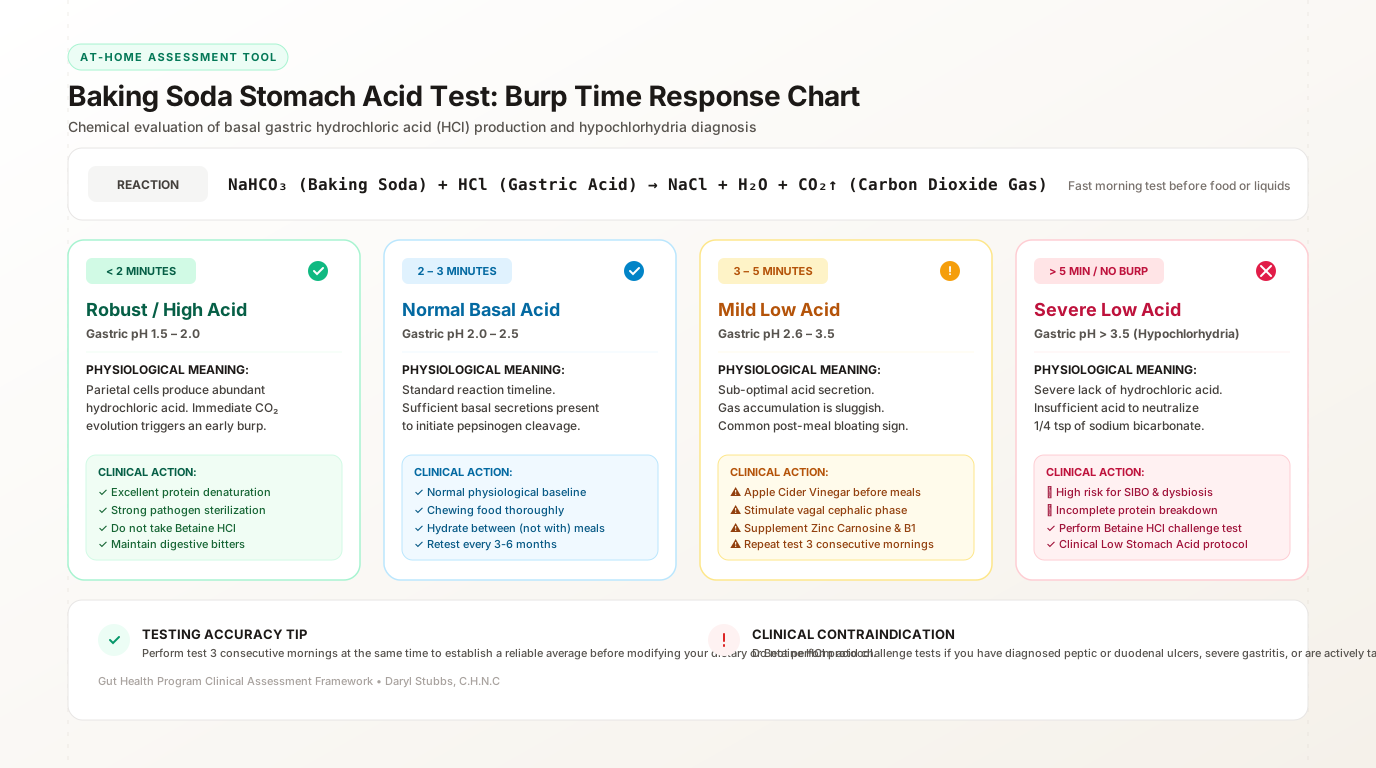
Baking Soda Burp Time Clinical Spectrum
Compare your stopwatch result directly against the scientific sodium bicarbonate reaction curve to assess estimated gastric hydrochloric acid (HCl) production.
Stomach Acid Is Just the Gatekeeper.
If your stomach acid is depleted, it causes a cascading failure downstream: your gallbladder won't release bile to digest fats, pancreatic enzymes won't activate, and undigested food particles will irritate and inflame your gut lining (driving leaky gut).
To identify your primary digestive pattern across all 8 zones (including joints, immune load, and bile flow), take the complete assessment.
Stomach Acid & Enzyme Restoration Guide
A comprehensive digital protocol detailing how to naturally rebuild gastric pH and stomach acid levels. Skip the clinical visits and follow Daryl's step-by-step restoration plan.
- Safe Betaine HCl Titration Schedule
- Enzyme Stacking & Brand Doses
- Cephalic Phase & Meal Priming
- 14-Day Digestive Meal Framework
🔒 Secure Checkout · 30-Day Money Back Guarantee
Understanding Hypochlorhydria (Low Stomach Acid)
Digestion is a strictly top-down process that begins in the brain (the cephalic phase) and proceeds down to the stomach. At the center of gastric digestion is **hydrochloric acid (HCl)**, a highly acidic fluid produced by the parietal cells of the stomach lining. Healthy stomach acid maintains an extremely low pH of **1.5 to 3.0**. This highly acidic environment is not a design flaw; it is a physiological necessity for several critical functions:
- Protein Breakdown: Hydrochloric acid chemically denatures protein strands, unfolding them so that the protease enzyme **pepsin** (which requires a pH below 2.5 to activate) can slice proteins into absorbable peptides. Without enough acid, proteins enter the small intestine partially digested, creating putrefaction and gas.
- Sterilization of Pathogens: Your stomach acid serves as a primary immune barrier. It sterilizes ingested food, killing off bacteria, yeast, fungi, and parasites. Low stomach acid increases vulnerability to **SIBO (Small Intestinal Bacterial Overgrowth)**, Candida overgrowth, and food poisoning.
- Mineral Ionization: Essential minerals like iron, calcium, magnesium, and zinc require an acidic environment to detach from food molecules and transition into an ionic form that the intestines can absorb. Chronic mineral deficiency is often a symptom of low stomach acid.
- Downstream Signaling: When highly acidic food (chyme) passes from the stomach into the duodenum (the beginning of the small intestine), the sudden drop in pH signals the pancreas to release digestive enzymes and the gallbladder to release **bile**. If chyme is not acidic enough, this signaling fails, resulting in sluggish gallbladder output and fat malabsorption.
How the Baking Soda Stomach Acid Test Works
The **baking soda stomach acid test** is a simple, cost-effective screening tool that operates on basic chemical principles. Baking soda is sodium bicarbonate ($NaHCO_3$), a highly alkaline compound. When you drink a solution of baking soda on an empty stomach, it mixes with the hydrochloric acid ($HCl$) in your stomach.
This acid-base reaction creates sodium chloride, water, and **carbon dioxide ($CO_2$) gas**. The resulting gas creates pressure in the stomach, which triggers a reflex burp.
If your stomach acid is normal, the reaction happens almost immediately, causing a burp within **2 to 3 minutes**. If your acid levels are depleted (hypochlorhydria), the chemical reaction is sluggish or nonexistent, resulting in a delayed burp or no burp at all after 5 minutes.
Common Causes of Low Stomach Acid
Stomach acid levels do not decline without reason. The most common drivers in clinical practice include:
- Chronic Stress: When your nervous system is in a fight-or-flight (sympathetic) state, blood flow is diverted away from the gut, immediately shutting down parietal cell acid production.
- Zinc and Vitamin B6 Deficiencies: Your body physically requires zinc and B6 to produce hydrochloric acid. Depleted mineral levels create a circular deficiency loop.
- Aging: Parietal cell function naturally slows down with age. Over the age of 50, HCl production can decrease significantly.
- H. Pylori Infection: The *Helicobacter pylori* bacterium colonizes the stomach lining and survives by secreting urease, an enzyme that produces ammonia to neutralize stomach acid in its immediate environment, depressing overall acidity.
- Proton Pump Inhibitors (PPIs) & Antacids: Medications designed to treat acid reflux work by permanently blocking the proton pumps that secrete HCl. While this stops the burning sensation, it halts the stomach's ability to sterilize and digest food, leading to severe chronic digestive issues.
Embed This Calculator on Your Site
Are you a nutritionist, health coach, or blogger? You are welcome to embed this interactive calculator on your own website. Simply customize the height, copy the code below, and paste it into your CMS (WordPress, Webflow, Squarespace, or custom HTML editor).