Bristol Stool Chart Auditor
Audit your daily digestive output. Combined with your symptoms and bowel frequency, this provides a functional analysis of your gut lining health.
Understanding Bowel Form, Transit Time, and Intestinal Health
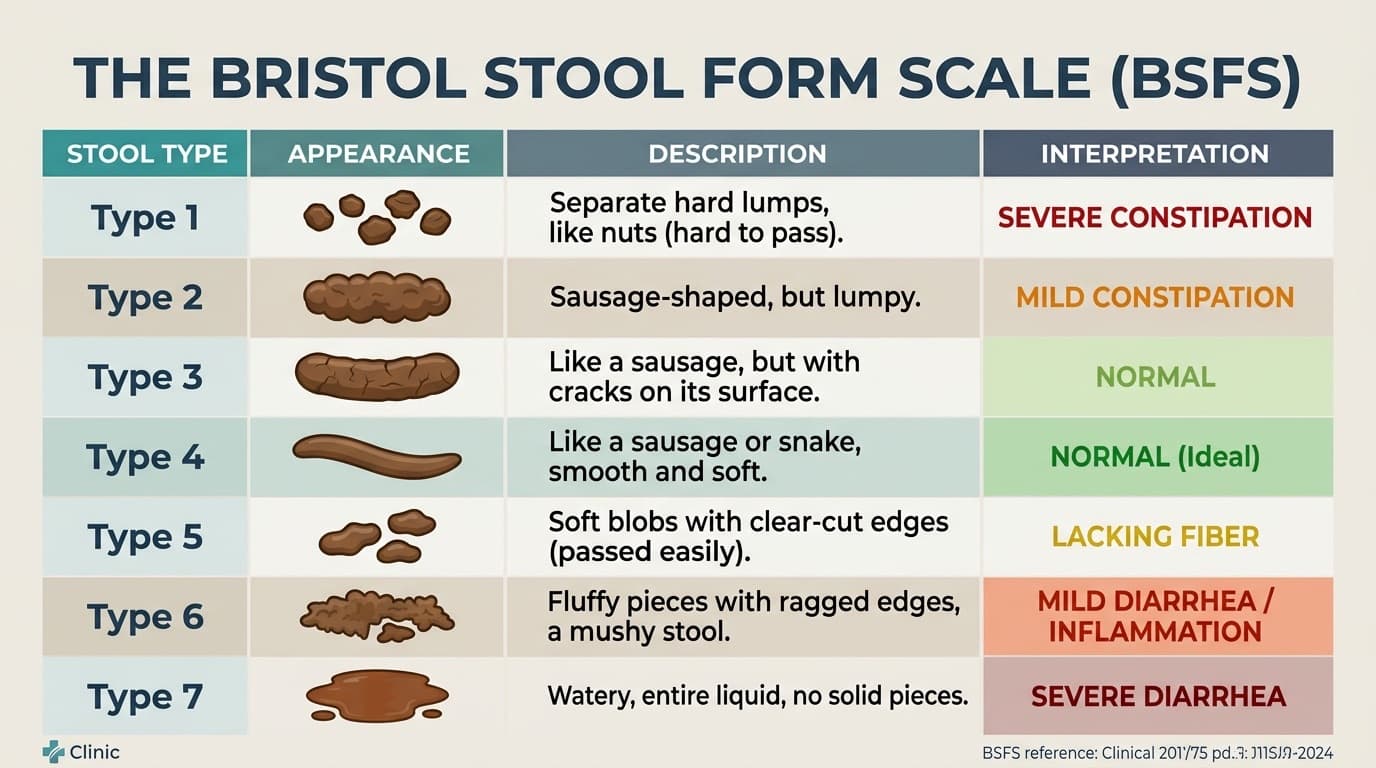
Using the clinical **bristol stool chart** is a highly effective way to analyze the hydration, motility, and health of your gut lining. Developed at the Bristol Royal Infirmary in the late 1990s, this scale acts as a reliable clinical marker for intestinal transit time—the speed at which food residues travel through the gastrointestinal tract. By observing the shape, consistency, and texture of your bowel movements, you can gain immediate insights into your digestive health, gut hydration levels, and mucosal integrity. In clinical practice, stool types are grouped into three primary categories: constipation (Types 1-2), optimal digestion (Types 3-4), and diarrhea or hypermotility (Types 5-7).
Bristol Stool Chart Type 1: Severe Transit Delay and Constipation
A bowel movement categorized as bristol stool chart type 1 consists of separate, hard lumps resembling small, dry nuts. Passing Type 1 stool is often difficult, painful, and requires significant straining. This form indicates that the digestive residue has remained in the colon for an extended period, allowing the large intestine to absorb excessive amounts of water and dehydrate the stool. Common causes of Type 1 stool include chronic dehydration, a lack of dietary fiber, magnesium depletion, or a suppressed Migrating Motor Complex (MMC) due to chronic stress or past food poisoning.
Bristol Stool Chart Type 5: Soft Blobs & Transit Timing
Stool classified as bristol stool chart type 5 appears as soft blobs with clear-cut, defined edges that pass easily. While passing Type 5 stool is not painful, it is considered borderline rapid transit. This means that food residues are moving through the intestines slightly too fast, preventing the colon from fully extracting water and binding the stool into a cohesive form. Type 5 bowel movements are frequently triggered by a lack of soluble binding fiber in the diet, high levels of acute stress, or mild gastrointestinal irritation.
Bristol Stool Chart Type 6: Mushy Stool & Gut Lining Inflammation
A bowel movement matching the bristol stool chart type 6is characterized by fluffy, mushy pieces with ragged, uneven edges. This indicates rapid motility (hypermotility), meaning food has traveled through the small and large intestines too quickly. As a result, the body has insufficient time to absorb vital micronutrients, minerals, and healthy fats, while the colon fails to reabsorb water. Type 6 stool signals active gut lining irritation or low-grade cellular inflammation. It is commonly triggered by food sensitivities (such as gluten or dairy), bacterial overgrowths (like SIBO), dysbiosis, or high sympathetic nervous system activity (the body's "fight or flight" response).
Regularly auditing your stool types alongside secondary symptoms like chronic bloating and gas is essential for addressing the root causes of digestive dysfunction. Restoring optimal stool consistency (primarily Type 4, which resembles a smooth, soft sausage) requires balancing your diet with diverse plant foods, drinking filtered water, and healing the gut's mucosal barrier.