Am I Fat or Bloated Quiz
Pinpoint the exact root cause of your stomach expansion. Discover if your symptoms are caused by gas fermentation, food intolerances, SIBO, or subcutaneous fat.
Does your stomach size fluctuate significantly from the morning to the evening?
True gas distension usually subsides overnight as the gut rests and clears accumulated fermentation products.
Is It Belly Fat or Severe Bloating? How to Tell the Difference
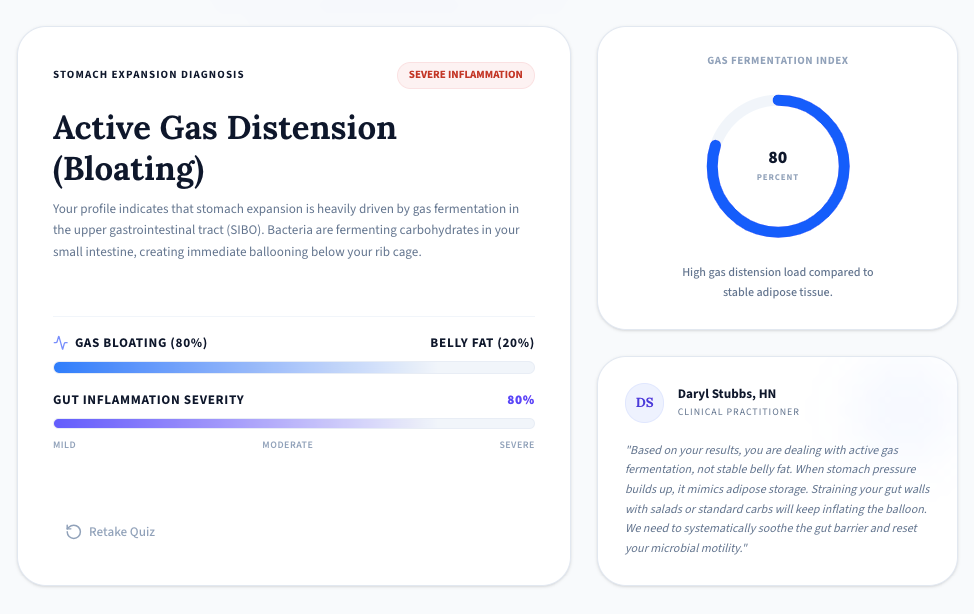
Taking an am i fat or bloated quiz helps you determine if your stomach expansion is caused by gas fermentation or stable adipose tissue. Understanding the difference between abdominal distension (bloating) and abdominal adiposity (belly fat) is essential for selecting the correct therapeutic protocol. While belly fat represents the accumulation of adipose tissue, bloating is the physical expansion of the abdomen caused by trapped gas, fermentation, fluid retention, or delayed digestion.
To determine which one you are experiencing, look at these four key diagnostic factors:
- Diurnal Variation (Stomach Size Fluctuations): If you wake up with a relatively flat stomach, but it swells significantly as the day goes on—especially after meals—you are experiencing bloating. Adipose tissue (fat) does not fluctuate in size in response to a single meal or over the course of a few hours.
- Abdominal Hardness and Elasticity: Press gently on your distended stomach. If it feels tight, firm, and drum-like (almost like an inflated balloon), it is distended with gas. If it feels soft, squishy, and easily yields to pressure, it is likely subcutaneous fat.
- Gastrointestinal Co-Symptoms: True bloating is almost always accompanied by other digestive signals, such as loud gurgling, excessive flatulence, frequent belching, nausea, or altered bowel habits (constipation or diarrhea).
- Speed of Onset: Bloating can appear within minutes after eating a trigger food. Adipose tissue accumulates slowly over weeks and months of a caloric surplus.
The Physiological Root Causes of Chronic Bloating
If the bloating quiz indicates that your expansion is gas-related, it is usually driven by one of two digestive issues:
1. Small Intestinal Bacterial Overgrowth (SIBO): In healthy individuals, the small intestine contains relatively few bacteria. If motility is sluggish or stomach acid is low, bacteria can migrate from the colon up into the small intestine. When you eat carbohydrates or prebiotic fibers, these bacteria ferment them prematurely, producing hydrogen, methane, or hydrogen sulfide gases. This creates severe upper bloating right below the rib cage, often within 30 to 90 minutes of eating.
2. Colonic Dysbiosis & Fermentation: In the large intestine, bacteria ferment undigested fibers. If your microbiome is imbalanced (dysbiosis) or you lack the enzymes to digest certain complex carbs (like FODMAPs), bacteria produce excess carbon dioxide and methane. This results in heavy lower bloating below the belly button, typically accompanied by flatulence.
Using our clinically backed screening quiz will help you differentiate between these mechanisms, allowing you to choose the exact dietary strategy to calm your digestive tract. If you need a fast-acting system to flatten your midsection, you can follow our step-by-step Rapid Bloating Relief Protocol to reduce distension.